Tell us a bit about The DJ Who Gave Too Much Information and how you came to make this work.
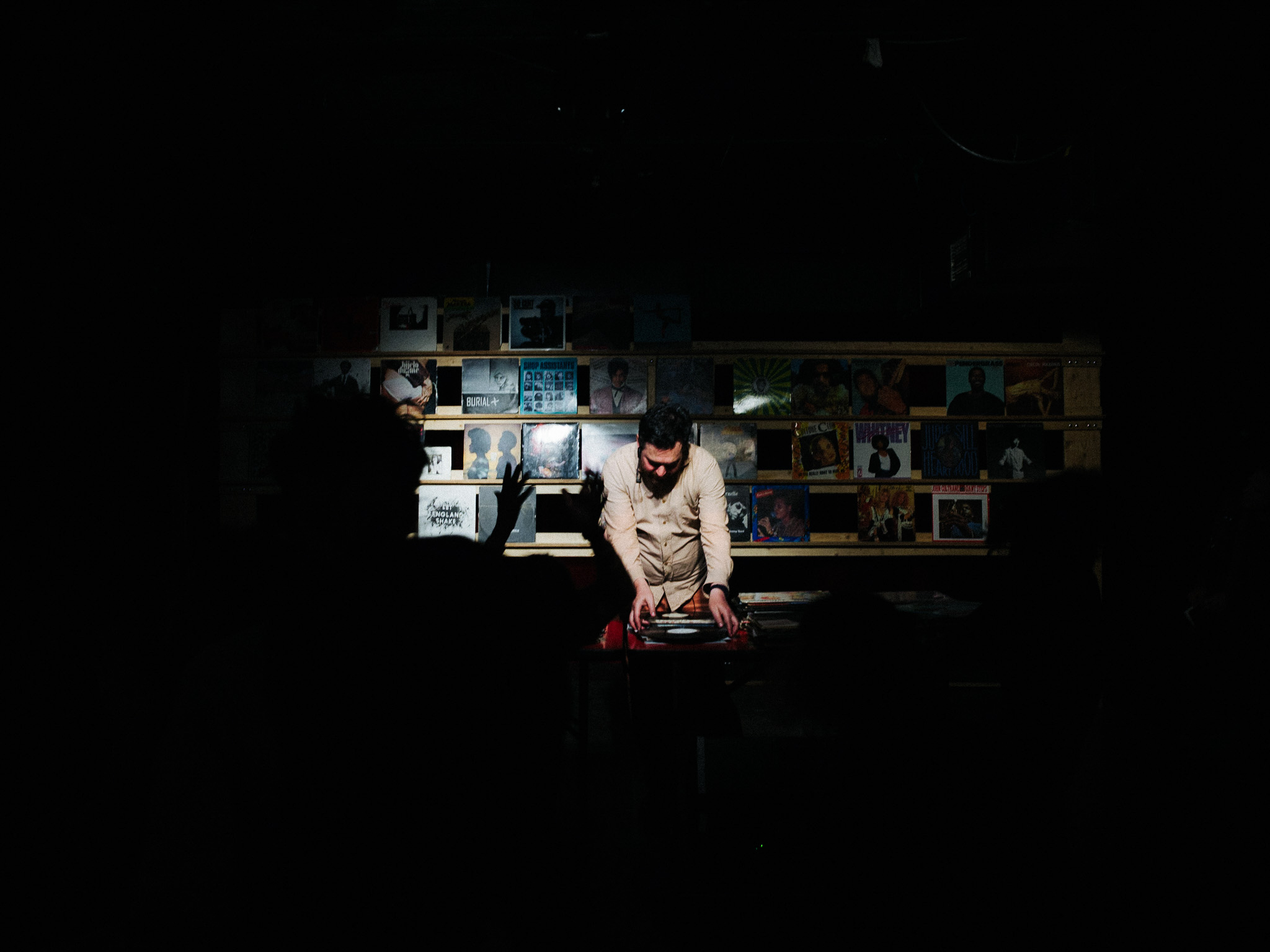
It is the final project in our long-running series on hospitality, where we explore how welcoming audiences warmly, openly alters the tone of a performance. One thing you might do when welcoming a stranger is put on music and maybe say something about it, why you like it, what it means to you. Music can be a starting point for conversation, or simply a way to spend time together by listening. Or dancing. It can change how you spend time together. We made the show before the era of Spotify, when listening to music felt a bit different. Some music was more unavailable, and having a friend play it for you felt more rare. We try to keep that pre-internet feeling of musical hospitality alive.
How do you see the audience’s role in the work?
We hope the audience will join us in ways that are enjoyable, relaxed and engaged. They can have a drink, come and go as they please, just be themselves. Our work often deals with speaking honestly onstage, including admitting nervousness, which creates a less hierarchical relationship between performers and audience. That way, we are just people in a room listening to music, stories and anecdotes. In that sense, the project has a political aspect: it resists the idea of performers as special figures on pedestals and instead frames performance, and even politics, as spaces anyone can step into. In this way, we hope the show has a little bit of an equalizing quality, suggesting that people dive into both art and politics themselves.
You’ve said all your work is about the relationship between art and politics. How does that show up here?
The show relates to life, love, politics and work, because music connects to all aspects of contemporary life. Popular music often reinforces the status quo, and many people look to less popular music for expressions of resistance and counter-politics.
So some of the show embody how music can express, promote or undermine all sorts of political positions. Popular culture has an enormous influence on how we view the world, and is often telling similar stories over and over again, with just enough differentiation to keep us hooked. I’m always looking for music that helps me undo some of this never-ending sameness. But still it works on me; the Sabrina Carpenter song (with its rather heteronormative values) enters my life and gets stuck in my head. That dynamic sits underneath the records we choose and the way we talk about them. Our collection is deliberately idiosyncratic, reflecting our different tastes and perspective.
What do you hope audiences leave with?
People often tell us they later recreate their own version of the show with friends, which I appreciate. I like that the project is open. People also tell us their stories about different records or songs, which make their way back into future performances. This creates a nice loop between us and them. Live performance is compelling, partly because something might go wrong; that unpredictability keeps things alive. The same is true in life: too much certainty becomes dull.
If the piece is a kind of performance of oversharing, what’s one thing you’ve learned to keep to yourself?
I was once asked this and answered, “I have never watched pornography,” an answer that was then used as the headline of the article, which I thought was funny. This answer remains true, but I don’t see any reason for it to be kept a secret. So perhaps that counts as oversharing. If I were to share this information with random people on the bus, it would obviously be frowned upon. In truth, I keep a lot to myself; and I prefer not to know too much about an artist before encountering their work, and I don’t mind when people fill the gaps about me with their own stories.
Most of the show’s stories come from research into the music, bands and songs. When people tell me about their experience of watching the show, they refer to their own stories connected to songs or records.
Music evokes such strong memories and references. Those memories might sometimes trigger oversharing. Ultimately, the piece is driven by a simple love of music, and the pleasure of listening to it.
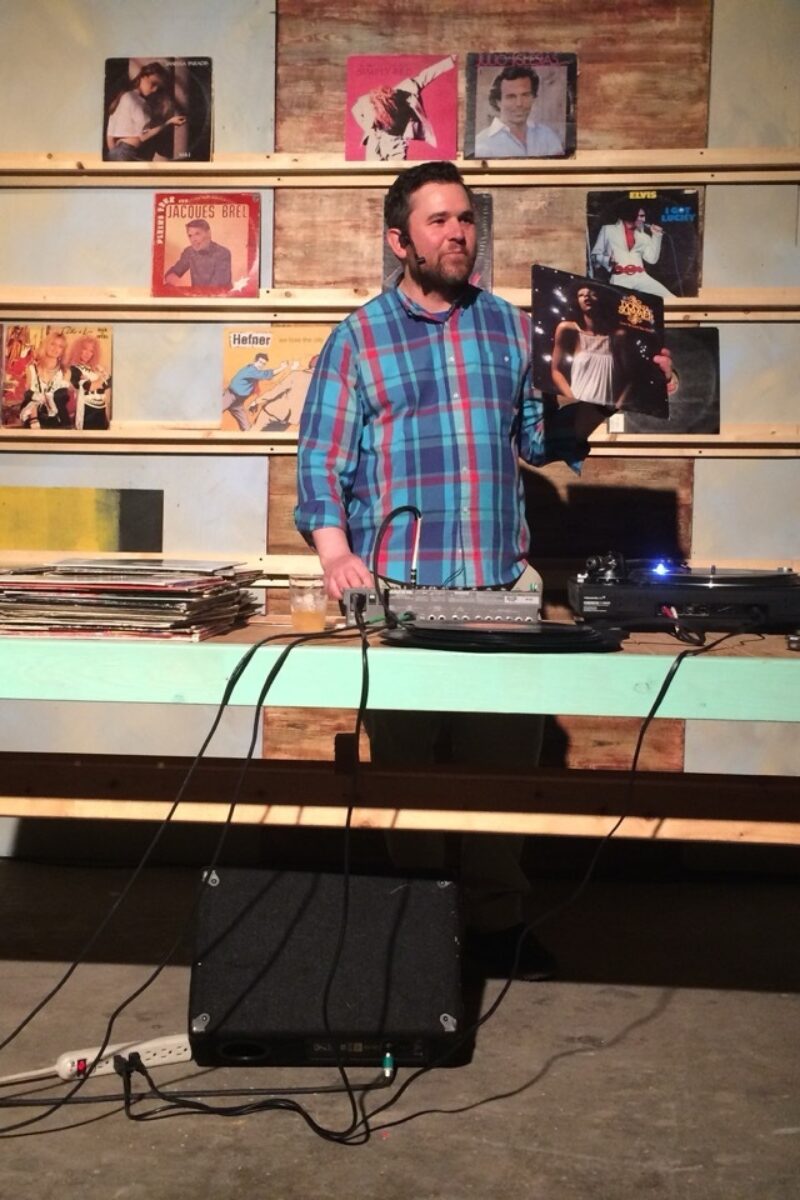
The DJ Who Gave Too Much Information
21. januar
Sal 1
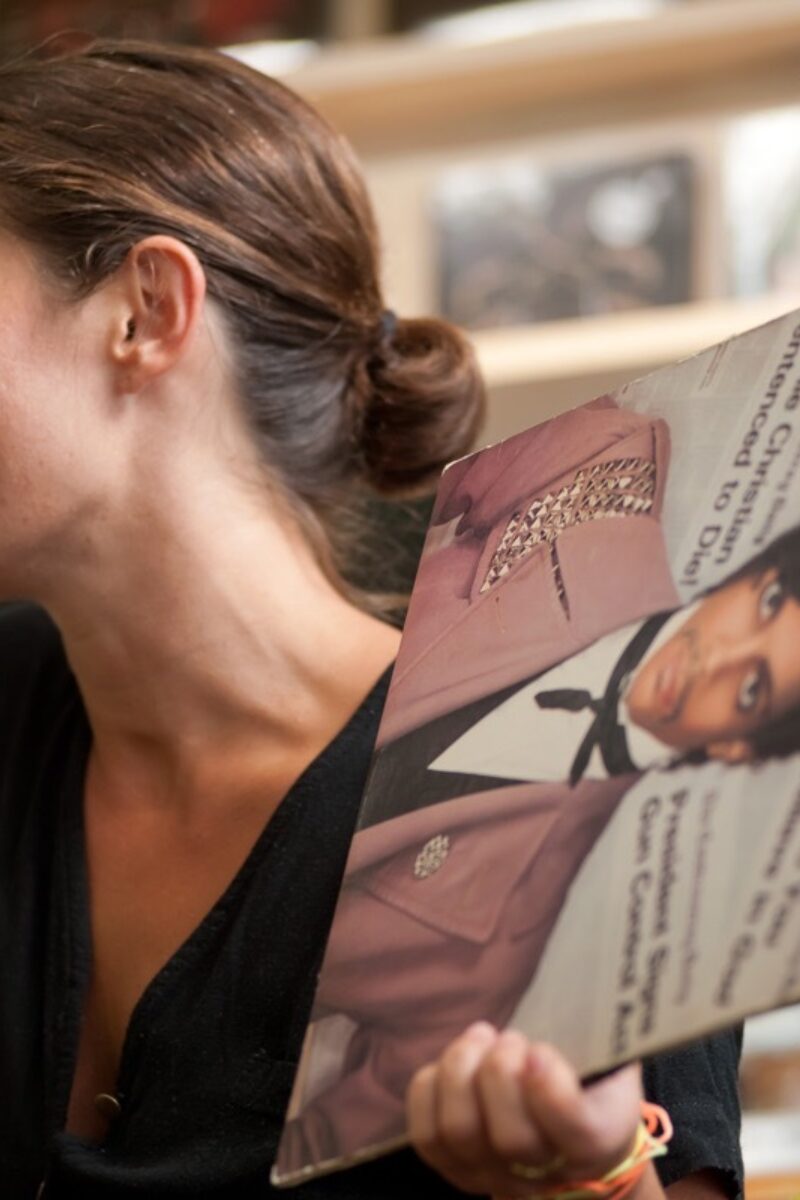
Bring your own record / Listening party
22. januar
Rosendal kafé
Besøk oss
Rosendal Teater
Innherredsveien 73
7068 Trondheim
Få med deg det som skjer i tide!
Design og nettside av Skogen